
How to Organize Toploaders and Penny Sleeves (Without the Mess)
Rubber bands are not a system. Three easy ways to sort toploaders and penny sleeves, where to keep them, and the mistakes that cost collectors money.
in this guide
If you collect, trade or sell cards, you know the pile. Penny sleeves in a sandwich bag. Toploaders in a different bag. One mystery stack with a rubber band around it. And the one hit you need for a trade, which is… somewhere. Probably.
Good news: organizing toploaders and penny sleeves takes about ten minutes once, and then your desk stays fixed. This guide covers what each holder is for, three ways to sort your cards, where to store everything, and the mistakes that quietly cost collectors money. Works for Pokémon, sports cards, Magic, One Piece and anything else in a standard card size.
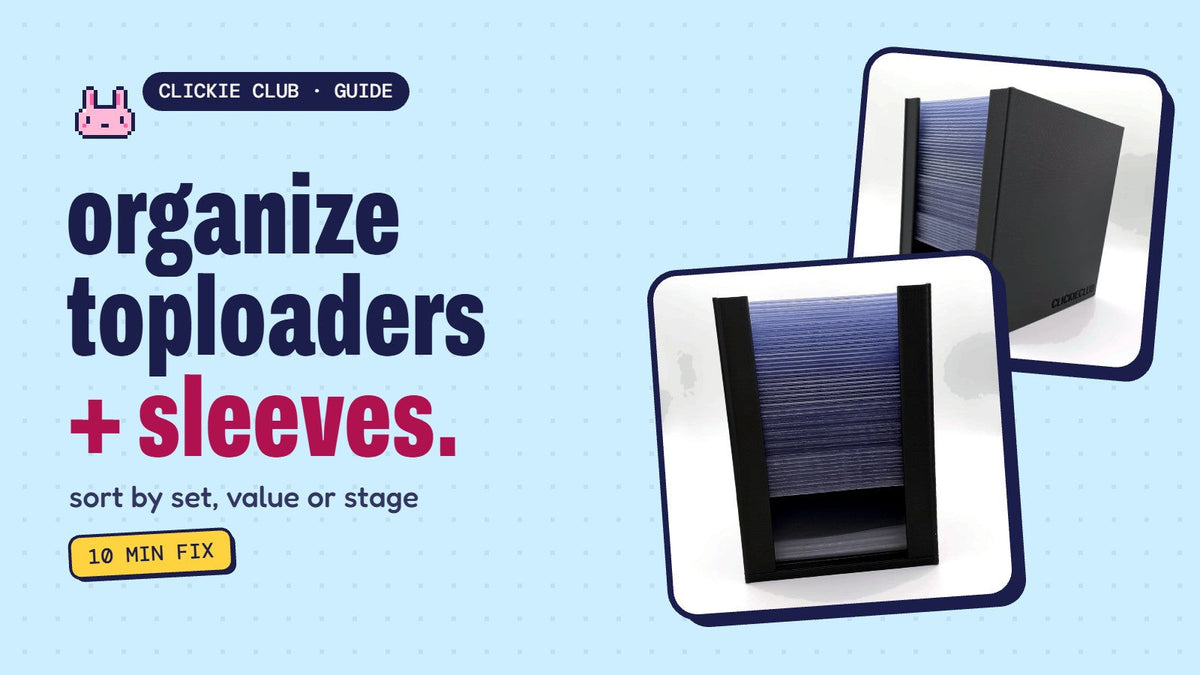
the short version: every keeper goes in a penny sleeve, hits go sleeve + toploader, and both live standing upright right where you open packs. The Ripper holds 200 sleeves and 50 toploaders in one desk box so you can protect a pull before your heart rate comes down.
penny sleeves vs. toploaders vs. semi-rigids (what's actually the difference?)
They all protect cards, they just protect against different disasters. Scratches, bends, and grading-company rejection letters, roughly in that order.
| holder | what it is | use it for |
|---|---|---|
| Penny sleeve | Thin, soft plastic sleeve. Costs about a penny, hence the name. | Every card you care about. Stops scratches, dust and fingerprints. |
| Toploader | Stiff plastic holder, usually 3" × 4". | Hits, trades, cards you sell or show off. Stops bends. |
| Thick toploader | Same size, deeper pocket (marked 55pt to 180pt). | Relics, patch cards, and anything that groans when you try a standard 35pt. |
| Semi-rigid (Card Saver) | Bendier, slimmer holder. | Cards headed to a grading company. Most graders ask for these. |
| One-touch (magnetic) | Hard snap-shut case. | Your best cards, on display, where guests will ask about them. |
The one rule to tattoo on your brain: card goes in the penny sleeve, then the sleeve goes into the toploader open end first, so the card can't slide back out. (We have a whole guide on opening packs without dinging cards if you want the full routine.)
3 easy ways to organize your cards
Pick whichever matches how you actually use your collection. You can stack them: sort by stage first, then by set inside each stage.
1. by stage (best if you trade or sell)
- Keep: the personal collection. Not for sale, don't ask.
- Trade bait: cards you'd happily swap at the next meetup.
- To sell: priced, photographed, ready to list.
- To grade: in semi-rigids, waiting on the next submission.
One row or one box per stage means you grab the right stack in seconds instead of flipping through everything you own while your trade partner checks their phone.
2. by set or series (best for collectors)
- Sort by set, then by card number.
- Drop a small label or tab at the start of each set.
- Chasing a master set? Gaps become painfully obvious, which is the point.
3. by value (best for protecting your hits)
- Under $5: penny sleeve, into a box or binder.
- $5 and up: penny sleeve + toploader.
- Your top few: one-touch or graded, somewhere you can see them.
Write prices on a sticky note stuck to the toploader. Never on the card, never on the sleeve. Future you, trying to peel a label off a holo, will be grateful.
where to store toploaders and penny sleeves
The right storage depends on how often you actually reach for the cards.
| storage | good for | watch out for |
|---|---|---|
| Toploader box or bin | Big stacks you rarely touch | Finding one specific card is a dig |
| Binder with 9-pocket pages | Sets and bulk in penny sleeves | Most pages don't fit toploaders |
| Desk organizer with slots | Cards you trade, sell or check often, plus your sleeve supply | Keep it out of direct sun |
| Card case or show box | Meetups and card shows | Pack it snug so nothing slides around |
For the stack you use every day, a desk organizer is the cheat code. The Ripper holds penny sleeves up top and toploaders in the bottom slot, open-fronted, so you grab one of each with one hand while the other hand is still holding the pull. 3D printed in Nashville in 12 colors, including a Blue Glow that glows in the dark, because why not.
tips for card shows, trades and selling
- Pre-sort the night before. Pull your trade bait into one row so you're not digging at the table.
- Price on the outside. Sticky note or label on the toploader, never on the card.
- Team bags for trades. Seal a toploader in a team bag so nothing escapes in your backpack.
- Ship it like you mean it. Penny sleeve → toploader → tape the top of the toploader (or team bag it) → sandwich between two pieces of cardboard. Buyers notice.
mistakes that cost collectors money
- Skipping the penny sleeve. A bare card scratches on the inside of a toploader. Yes, really.
- Forcing a thick card into a standard toploader. It bends the edges. Size up.
- Tape on the card or sleeve. Residue forever, and it can rip the card when you pull it out.
- Rubber bands. They dent the top and bottom card of every stack. Retire them.
- Heat and sun. Cards warp and fade. Cool, dry and dark, like a good cave.
FAQ: organizing toploaders and sleeves
Do I need a penny sleeve inside a toploader?
Yes. The sleeve stops the card from scratching on the hard plastic and makes it easy to slide in and out.
What size toploader fits a standard trading card?
The standard 3" × 4" toploader fits Pokémon, sports and most trading cards in a penny sleeve. Thick cards need a thicker toploader.
Should I use toploaders or semi-rigids for grading?
Most grading companies prefer semi-rigid holders like Card Savers. Check your grader's current rules before you ship.
What's the best way to store a lot of toploaders?
Upright, not stacked flat. A box works for long-term storage; a slotted desk organizer works for the cards and supplies you use every week.
ready to fix the pile?
Get your toploaders and penny sleeves standing up and sorted with the Ripper. Running low on supplies? Here's where to buy toploaders, plus which size you need.
stuff that helps.


more guides.

12 gifts for Pokémon card collectors under $25 (that aren't more cards)
Sleeves, toploaders, a desk organizer, an ornament for their best pull: 12 gifts card collectors actually use, sorted by budget, plus what...
read it →
3D printed fidget keychains: the fidget you can't forget
How fidget keychains are printed, PLA vs PETG for keys, clicker and name keychains, and what to check so it survives a...
read it →
3D printed fidget balls, explained: printed in one piece, fold forever
What a fidget ball is, how the hinges get printed already moving, fidget ball vs infinity cube vs clicker, and how to...
read it →


